Markets Touch 7,000 — And Flinch
If January was meant to confirm a smooth start to 2026, this week delivered a very different message. The S&P 500 briefly touched the symbolic 7,000 level, stared into the valuation abyss, and stepped back. Not with panic — but with hesitation.
This was a week defined by contradiction. Equity indices hovered near record highs, yet confidence on the ground collapsed. The Federal Reserve paused, but inflation showed signs of sticking. Jobs remained plentiful, yet households felt poorer than they have in over a decade.
From New York’s growing fatigue, to Europe’s cautious rebound, to currency volatility in Japan and lowered ambitions in China, global markets are no longer moving in unison. They are negotiating trade-offs — between growth and prices, optimism and credibility, momentum and exhaustion.
Below is a structured breakdown of what mattered, what didn’t, and what could reshape markets in the week ahead.
United States: New Highs, Growing Unease
At first glance, US markets looked strong. The S&P 500 briefly traded above 7,000 intraday, a psychological milestone that would normally signal confidence. Instead, the index failed to hold the level, revealing a clear pocket of resistance.
The composition of market leadership tells the real story. Large-cap value outperformed growth, while small- and mid-cap stocks lagged meaningfully. This was not a broad risk-on rally. It was a selective, defensive rotation into cash-generating, lower-volatility names.
Sector performance reinforced the message. Communication services and energy led the market, while healthcare underperformed amid regulatory and pricing concerns. Energy’s strength reflects its role as an inflation hedge rather than a growth bet.
The sharpest warning signal came from consumers. The Conference Board’s consumer confidence index plunged to 84.5, the lowest reading since 2014. That collapse stands in stark contrast to equity prices near record highs.
The paradox is striking. Job security remains strong. Initial jobless claims fell to 209,000, and continuing claims reached their lowest level since September 2024. Statistically, few people are losing jobs — yet sentiment is deteriorating rapidly.
The missing link is inflation. Producer prices rose 0.5 percent month over month in December, a notably hot reading. Crucially, the increase was driven by services and widening margins, not energy. This indicates that companies still have pricing power — raising prices because they can.
The implication is uncomfortable. The easy phase of disinflation is over. The remaining fight is against sticky, margin-driven inflation that erodes purchasing power without triggering job losses. That combination is toxic for confidence.
Federal Reserve: Pausing, But Not Reassuring
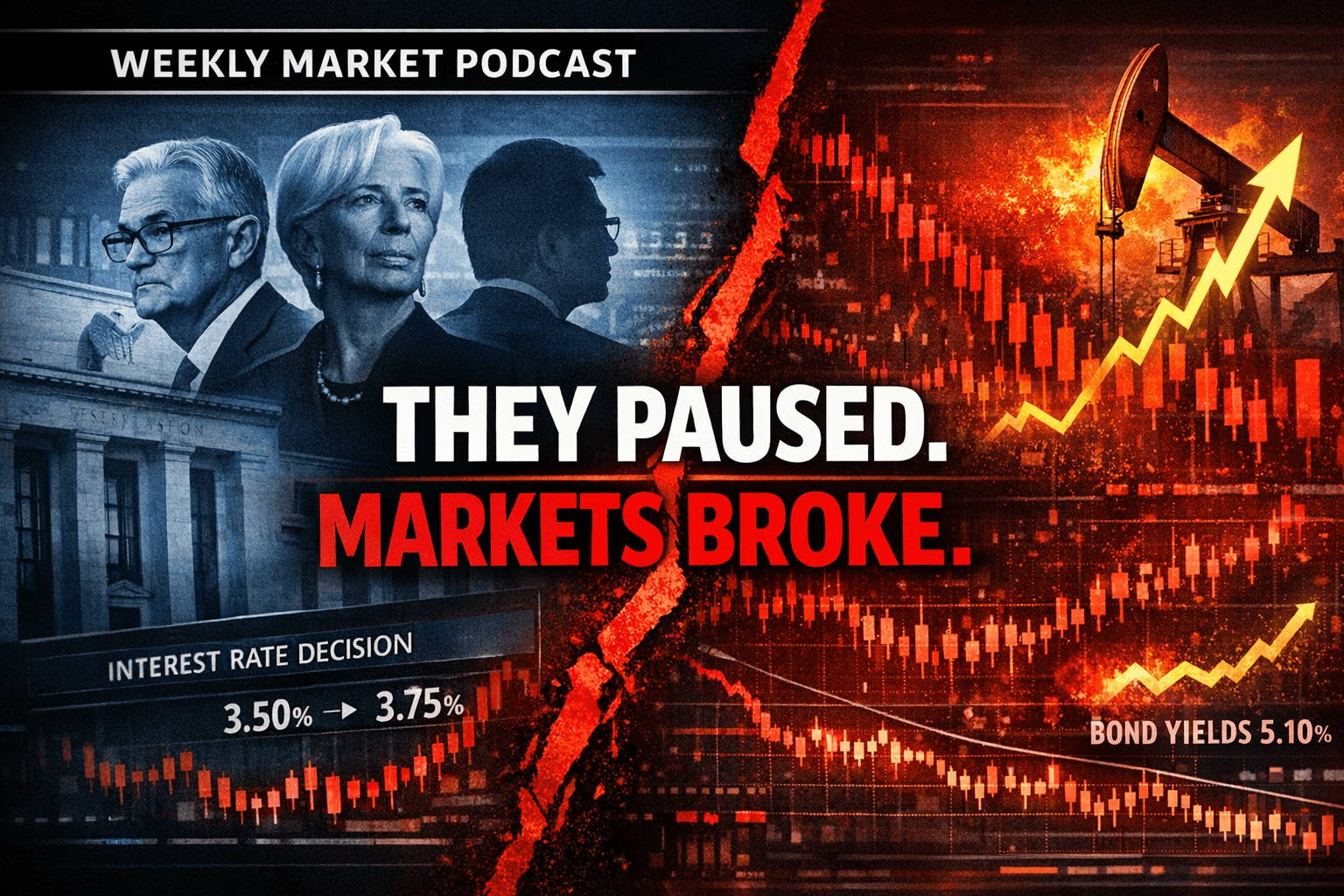
The Federal Reserve held rates steady at 3.5 to 3.75 percent, marking a pause after three consecutive cuts. Chair Powell maintained a cautious, meeting-by-meeting stance, attempting to preserve optionality.
But political developments complicated the message. President Trump’s nomination of Kevin Warsh as Powell’s successor months ahead of schedule injected uncertainty into the policy outlook. While Warsh is experienced and market-savvy, questions around independence and fiscal alignment matter more than credentials.
Markets know Powell’s framework. They are still learning Warsh’s. That uncertainty increases risk premiums at precisely the moment inflation is proving difficult to extinguish.
Europe and the United Kingdom: Recovery With Friction
Europe delivered a genuine surprise. The Eurozone economy grew 1.5 percent in 2025, beating expectations, with fourth-quarter growth of 0.3 percent. Spain and Italy led the expansion, while sentiment indicators climbed back toward long-term averages.
France also showed improvement following the easing of its budget standoff. Business leaders appear more willing to invest again, reflecting cautious optimism.
Germany remains the weak link. Berlin cut its 2026 growth forecast to just 1.0 percent, citing structural challenges, slow reform, and lingering energy constraints. While Southern Europe accelerates, the continent’s industrial engine is sputtering.
The UK presents a different problem. Equity markets held up thanks to global exposure, but the domestic economy is under strain. Mortgage approvals fell to just over 61,000 in December, the weakest level in 18 months.
Unlike the US, most UK mortgages reset every two to five years. Millions of households are now rolling off ultra-low rates onto significantly higher payments. This delayed transmission of monetary tightening is now hitting consumption directly.
For the Bank of England, the dilemma is acute. Inflation has not fully disappeared, yet household stress is rising rapidly. Policy flexibility is limited.
Japan: Currency Volatility and Political Risk
Japan experienced another week of whiplash. Equity markets slipped, but the real action was in foreign exchange. The yen swung sharply on speculation about government intervention and concerns over unfunded tax cuts.
The yen’s role as the global funding currency makes these moves systemically important. When the yen strengthens abruptly, carry trades unwind, pulling liquidity out of global markets.
Political uncertainty added fuel. Ahead of the February 8 lower-house election, markets are focused less on outcomes than on stability. The good news is that inflation pressure eased slightly, with Tokyo core CPI slowing to 2.0 percent, giving the Bank of Japan room to wait.
Still, currency volatility remains a global risk channel few can afford to ignore.
China: Lower Targets, Lower Expectations
China’s markets were relatively stable, but the real signal came from policy guidance. Thirteen provinces, including manufacturing powerhouses such as Guangdong and Jiangsu, lowered their 2026 growth targets.
This is a clear message. Beijing is prioritizing stability over speed. The long-anticipated stimulus bazooka is not coming.
A controlled slowdown caps demand for commodities, luxury goods, and capital equipment. That shift matters globally, particularly for Europe and emerging markets tied to Chinese demand.
The Week Ahead: February 2–6
Next week is loaded with catalysts.
In the US, it is jobs week. ISM manufacturing arrives Monday, JOLTS on Tuesday, and Friday delivers non-farm payrolls and the unemployment rate. With consumer confidence collapsing, labor data is the last pillar holding the soft-landing narrative together.
Europe faces critical decisions. Flash CPI arrives Wednesday, followed by ECB and Bank of England policy announcements on Thursday. Language will matter as much as action.
Asia opens with China’s manufacturing PMI on Monday, confirming whether lower growth targets reflect economic reality. Japan’s election on Sunday adds political risk to already volatile currency markets.
Top Five Risks to Watch
US labor market surprise
A sharp slowdown revives recession fears, while excessive strength forces yields higher. Payrolls must be “just right.”
Sticky inflation reemerges
The recent PPI spike suggests inflation may be embedding itself through margins, forcing rates higher for longer.
ECB policy misstep
Overly aggressive messaging could derail Europe’s fragile recovery.
Japanese currency intervention
Sudden yen moves can trigger global liquidity shocks via the carry trade.
China growth disappointment
Weak PMI data would reset global demand expectations and pressure commodities.
Final Insight: Walking on Thin Ice
Markets may be near record highs, but they are no longer comfortable there. This rally lacks conviction. Investors are rotating defensively, consumers are anxious, and central banks are pausing rather than pivoting.
Touching 7,000 felt less like a breakthrough and more like testing frozen ground. For now, the ice is holding — but each new data point sends another crack across the surface.
The question for February is not whether markets can rise, but whether confidence can catch up to prices. We will be watching closely.
FAQs
Why did the S&P 500 fail to hold 7,000?
Because valuation concerns and defensive positioning outweighed momentum buying.
Why is consumer confidence collapsing despite strong jobs?
Persistent inflation and eroding purchasing power are overwhelming employment stability.
Is inflation really coming back?
Producer price data suggests margin-driven inflation remains embedded.
Why does the yen matter globally?
It underpins carry trades that fund global risk assets.
What is the biggest risk next week?
US labor data — it anchors both growth expectations and Fed policy.
Hashtags
#WeeklyMarketUpdate #SP500 #MarketPsychology #Inflation #FederalReserve #GlobalMarkets #ConsumerConfidence #JapanYen #ChinaEconomy #ECB #MarketVolatility
Subscribe to our Newsletter
Discover more