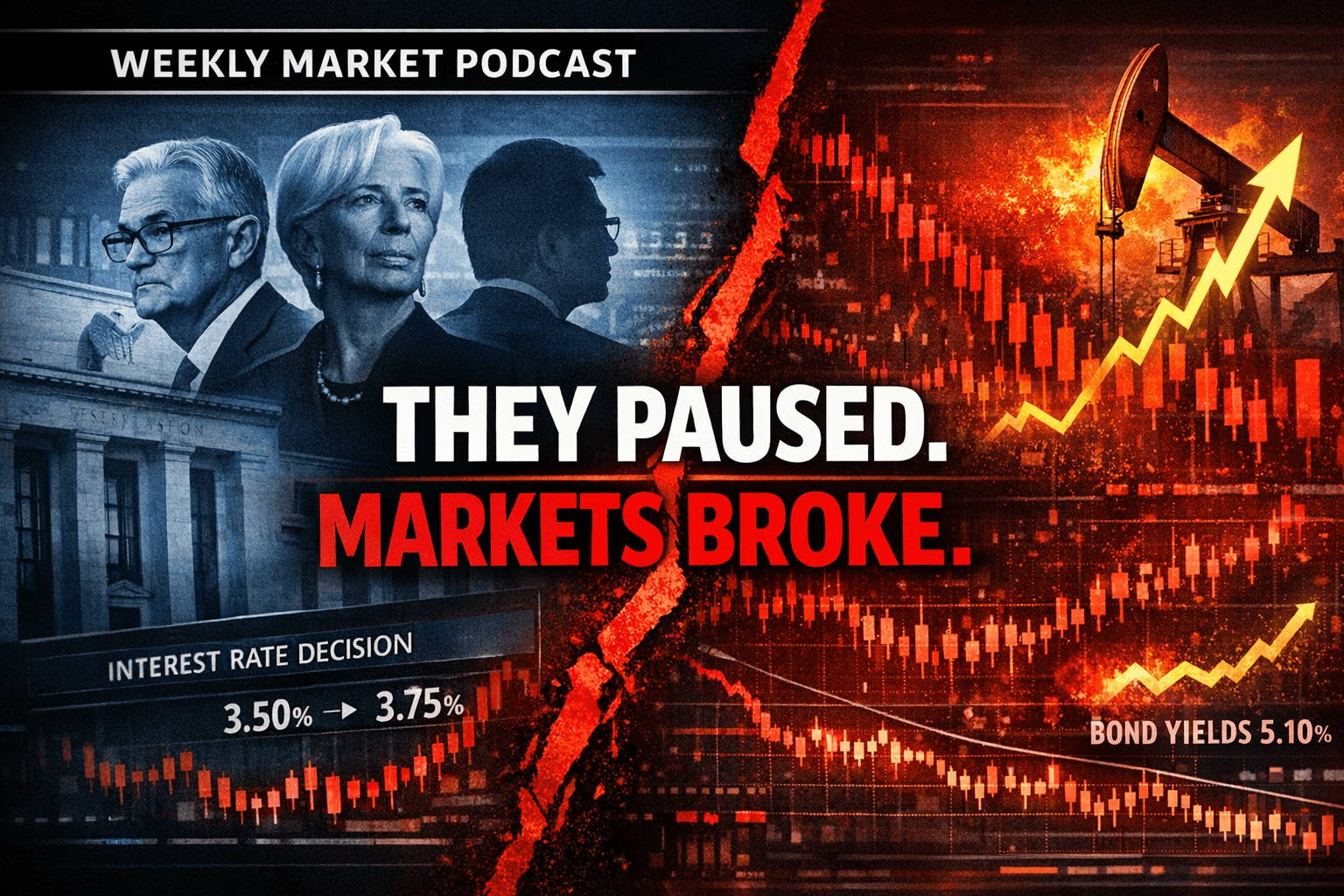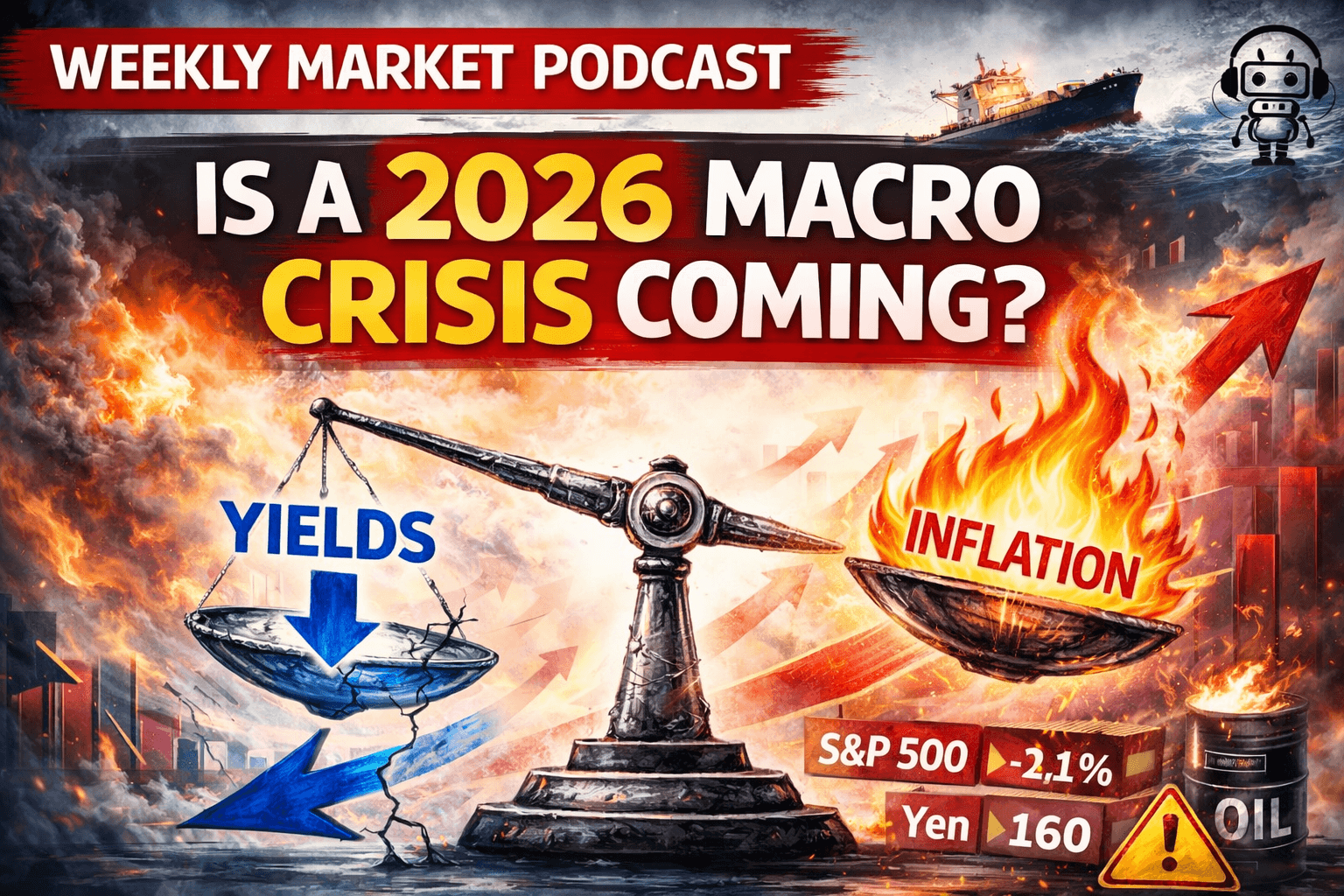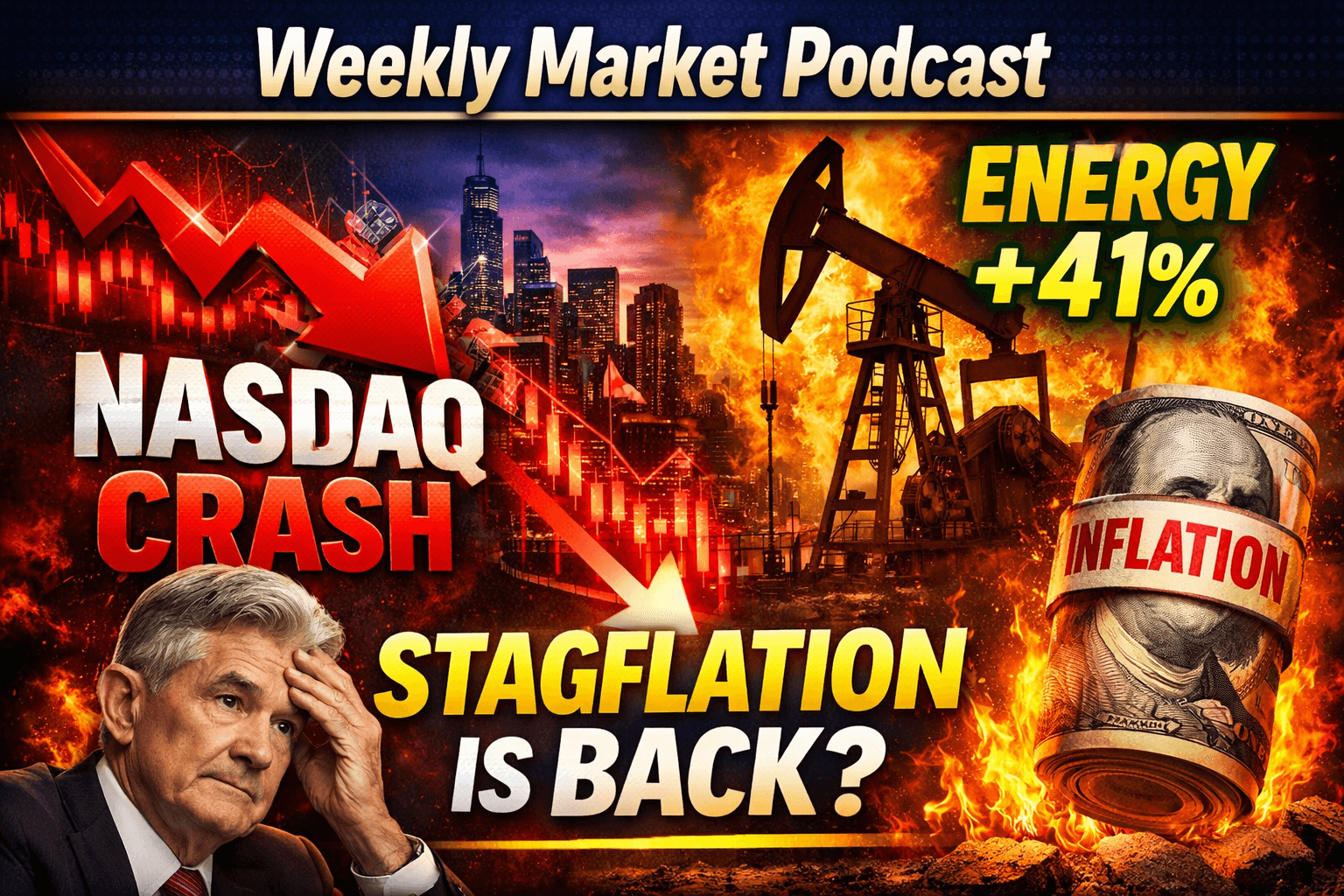
The week ending March 27, 2026 delivered one of the most unusual and dangerous market signals in recent years.
Global markets didn’t just move.
They split.
Technology stocks fell sharply, pushing the NASDAQ officially into correction territory — down more than 10% from recent highs.
At the exact same time, the energy sector surged over 40% year-to-date.
This is not a normal market rotation.
It is a structural divergence — and a warning.
Equities are falling.
Bond yields are rising.
Inflation expectations are climbing again.
The narrative didn’t just shift.
It fractured.
What we are witnessing is not a continuation of the previous cycle.
It is the emergence of a stagflationary regime, driven by energy and geopolitics.
The Real Shift: From Growth Narrative to Stagflation Risk
For months, markets were anchored to a familiar expectation:
Inflation was cooling
Central banks would cut rates
A soft landing was achievable
That framework is now breaking.
The driver of inflation is no longer demand.
It is energy.
And that distinction changes everything.
Demand-driven inflation can be controlled with interest rates.
Energy-driven inflation — caused by geopolitical shocks — cannot.
Central banks cannot produce oil.
They can only suppress demand.
And that creates a dangerous trade-off:
Fight inflation → crush growth
Support growth → fuel inflation
This is the definition of stagflation.
United States: Growth Slows While Inflation Expectations Rise
US markets are showing clear signs of stress.
NASDAQ: officially in correction (−10%)
S&P 500: −2.1%, fifth consecutive weekly loss
10Y Treasury yield: 4.43%
Consumer sentiment: 53.3
Inflation expectations: 3.8%
This is a classic stagflation setup.
Economic activity is slowing, while inflation expectations are rising again.
The mechanism is tightening:
Higher energy costs → rising input prices
Weaker demand → slowing growth
Higher yields → tighter financial conditions
The Federal Reserve is increasingly trapped.
Cutting rates risks reigniting inflation.
Holding rates risks deepening the slowdown.
The margin for error is shrinking rapidly.
Europe: Energy Shock Meets Structural Weakness
Europe is facing a more fragile version of the same dynamic.
STOXX 600: +0.35% (despite weak fundamentals)
Germany IFO: 86.4
Eurozone PMI: 50.5
OECD 2026 growth forecast: 0.8%
The apparent market resilience is misleading.
Underneath, the macro picture is deteriorating fast.
Europe’s vulnerability is structural:
Heavy dependence on imported energy
Industrial exposure to rising input costs
Weak external demand
The ECB is caught in a policy trap.
Tighten → risk recession
Ease → risk currency weakness + imported inflation
Markets are not pricing growth.
They are pricing intervention.
United Kingdom: The Delayed Inflation Shock
The UK presents a different — but equally concerning — dynamic.
FTSE 100: +0.49%
CPI: 3% (stable for now)
OECD growth forecast: 0.7%
At first glance, inflation appears contained.
But this is likely temporary.
The UK is experiencing delayed pass-through inflation.
Energy costs have surged globally, but:
Contracts delay price transmission
Businesses absorb costs temporarily
Once those hedges roll off, inflation is likely to accelerate.
This creates a lagged stagflation risk:
Growth already weakening
Inflation shock still ahead
Japan: Currency Weakness Meets Energy Inflation
Japan is entering a highly unstable configuration.
Nikkei: flat
10Y JGB yield: 2.34%
Yen approaching 160/USD
The combination is dangerous:
Weak currency → more expensive energy imports
Rising oil prices → direct inflation pressure
Japan is effectively importing inflation.
The Bank of Japan faces an impossible choice:
Raise rates → stabilize currency but hurt growth
Stay loose → fuel inflation further
There is also a global risk.
If Japan intervenes to defend the yen, it may sell US Treasuries — potentially pushing global yields higher.
China: Strong Data, Weak Markets
China presents a sharp contradiction.
CSI 300: −1.41%
Hang Seng: −1.29%
Industrial profits: +15.2%
Private sector profits: +37.2%
Domestic fundamentals are improving.
But markets are falling.
Why?
Because investors are focused on external risks:
Rising US-China trade tensions
Geopolitical uncertainty
Energy cost pressure
China’s recovery is real.
But it is constrained by global conditions.
Markets are pricing risk — not growth.
The Week Ahead: A Critical Macro Test
The upcoming data cycle will be decisive.
United States:
JOLTS (labor demand)
Retail sales
Jobless claims
Non-Farm Payrolls (released on Good Friday)
ISM PMI
Europe:
CPI (Germany, France, Italy, Eurozone)
Asia:
Japan Tankan survey
China PMIs
The Good Friday timing is critical.
Markets will be closed when key US data is released.
This creates a high probability of gap risk when markets reopen.
Volatility is likely to increase.
Top Five Risks to Watch
Energy-driven inflation accelerates
Oil and gas remain the dominant macro drivers.US labor market weakens
Jobs data is the last pillar supporting consumption.Central bank policy mistakes
Conflicting signals increase the probability of error.Middle East escalation
Supply disruptions could trigger another energy spike.US-China trade tensions
New tariffs could hit global supply chains and growth.
These risks are interconnected.
Together, they create a fragile and unstable macro environment.
Final Thought: A Market Regime Shift
This week delivered a clear message.
Markets are no longer driven by growth expectations.
They are being driven by energy and geopolitics.
This is a fundamental shift.
The traditional playbook — where central banks guide the cycle — is weakening.
Because central banks can control demand.
But they cannot control energy.
The key question now is:
Is this a temporary shock…
or the beginning of a prolonged stagflationary cycle?
The answer will define the next decade of markets.
FAQs
Why are markets splitting right now?
Because energy is driving inflation higher while growth is slowing — creating a stagflation dynamic.
Why is energy so important?
It impacts every sector through costs, inflation, and expectations — and cannot be controlled by central banks.
Why are tech stocks falling?
Higher interest rates reduce the value of future earnings, hitting growth stocks hardest.
Why is Europe more vulnerable?
Due to its dependence on imported energy and industrial exposure.
What is the biggest risk ahead?
A combination of energy shocks and policy mistakes triggering sustained stagflation.
Hashtags
#MacroNav #GlobalMarkets #Stagflation #Inflation #EnergyCrisis #OilPrices #CentralBanks #FederalReserve #ECB #BankOfJapan #ChinaEconomy #Geopolitics #Macroeconomics #StockMarket #Investing
Subscribe to our Newsletter
Discover more