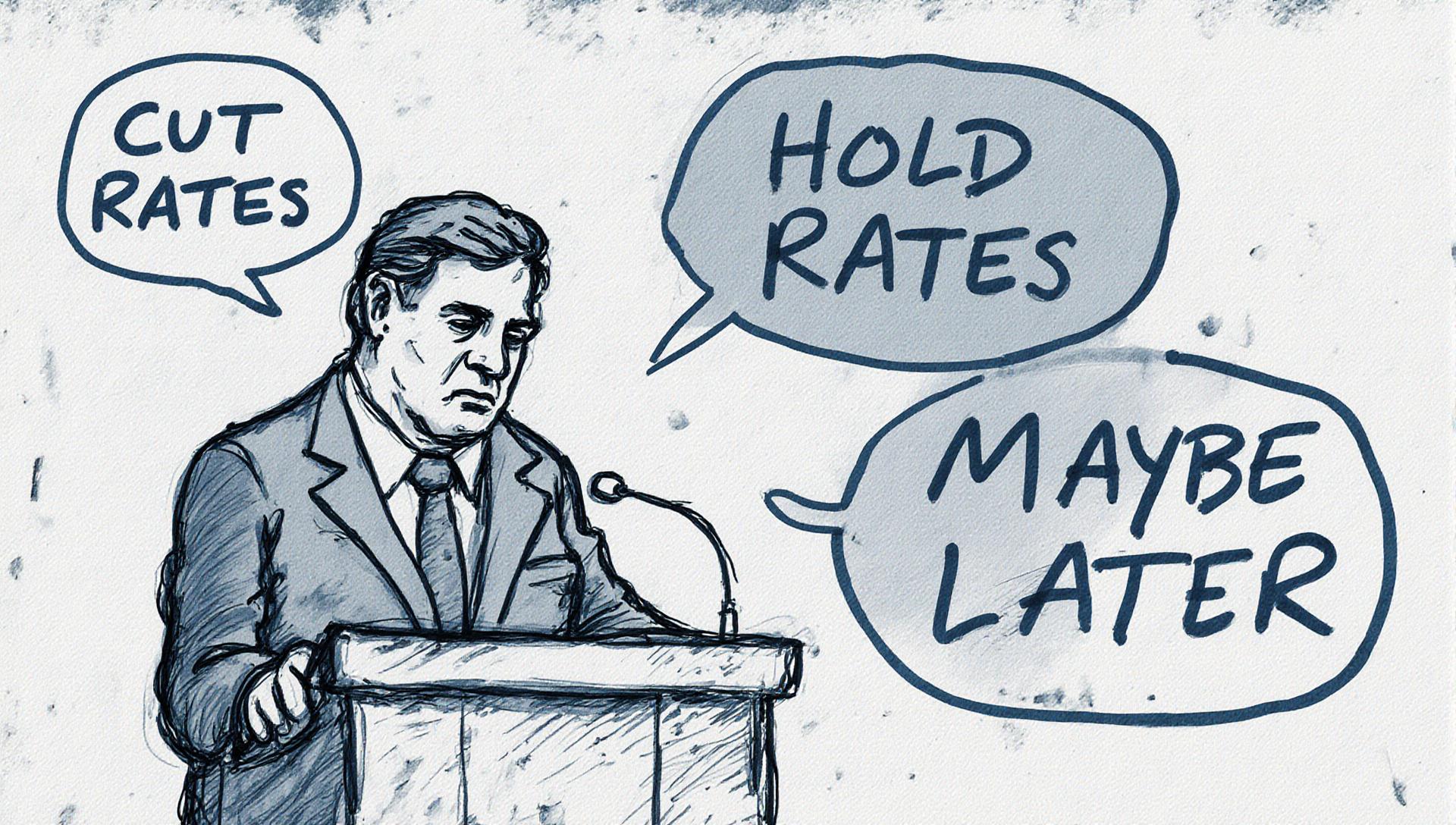
We have just closed the book on a holiday-shortened, low-volume week that felt deceptively calm on the surface. In reality, global markets were holding their breath, waiting for the opening bell of 2026. After a phenomenal 2025 that defied nearly every forecast, the tone has clearly shifted. What dominates now is tentative optimism shaped by sharply divergent economic and policy paths.
The era of a rising tide lifting all boats appears to be over. Selectivity is back, dispersion is rising, and central banks are increasingly cornered by their own data. This Weekly Market Update distills the signals that matter most as markets transition into the first quarter of the new year, highlighting where risks are building and where opportunities may still emerge.
United States: Unexpected Momentum Complicates the Fed’s Path
At first glance, US markets looked uneventful. The S&P 500 slipped just 0.19%, while the Nasdaq was nearly flat. But those modest moves hide a much larger story when viewed against the broader backdrop. The S&P 500 closed 2025 with its third consecutive year of double-digit gains, an outcome that is anything but typical late in an economic cycle.
What stands out is the resilience in the underlying data. The most striking surprise came from housing. After months of consensus that the sector would remain frozen, pending home sales surged 3.3% in November, the fastest monthly increase in nearly three years. This is more than a marginal rate effect. It reflects a psychological shift. Buyers appear to have accepted the new interest-rate regime and are re-entering a market constrained by tight supply.
That renewed activity is supported by continued wage growth and a still-robust labor market. Weekly jobless claims dropped to 199,000, an exceptionally low level that suggests hiring freezes remain limited. This combination of housing momentum and labor strength places the Federal Reserve in a difficult position.
Minutes from the December FOMC meeting revealed deep internal disagreement. Dovish members are concerned about overtightening, while hawks point to strong demand and housing reacceleration as evidence that easing too soon risks reigniting inflation. The debate has shifted away from whether the economy is faltering to when a pivot would be optimal. That uncertainty is likely to keep investors on edge through January.
Europe and the UK: Inflation Relief Meets Consumer Strain
European equities entered the new year on a stronger footing. The STOXX Europe 600 rose more than 1.25%, supported by improving macro data and continued disinflation. Spain provided a clear signal, with headline CPI falling sharply to 3.0% in December, reinforcing the view that goods deflation is finally flowing into services.
However, progress remains uneven. Core inflation across the Eurozone held stubbornly at 2.6%, highlighting how slowly underlying pressures are moderating. While countries like Sweden signaled no rate changes through 2026, providing policy clarity, the broader picture remains fragile.
The UK illustrates this tension most clearly. The FTSE 100 briefly crossed the 10,000 mark, an eye-catching milestone driven largely by multinational exposure. Beneath the surface, however, domestic conditions deteriorated. Nationwide house prices unexpectedly fell 0.4% in December, a clear sign that prolonged high rates are finally weighing on households.
Because property values are so closely tied to consumer confidence in the UK, this decline signals a shift toward debt servicing over discretionary spending. For investors, this divergence suggests vulnerability in UK-focused sectors such as homebuilders and retailers, while selectively improving opportunities may emerge in high-quality fixed income.
Japan: Yield Shock and Currency Pressure After a Historic Pivot
Japan’s remarkable 2025 rally, fueled by a weak yen, is now confronting a major policy reckoning. The Nikkei slipped 0.8%, but the real action is in the bond market. Ten-year Japanese government bond yields surged to 2.07%, their highest level since 1999.
This move reflects mounting fiscal concerns and growing conviction that the Bank of Japan is preparing to fully abandon ultra-loose policy. Yet the yen remains under pressure near 156 per dollar, a level uncomfortably close to past intervention thresholds.
This paradox underscores how difficult it is to exit decades of zero-rate policy. Rising yields have not translated into currency strength because markets question the pace and credibility of future tightening. The Bank of Japan minutes confirmed a hawkish tilt, with officials seeing scope for additional hikes this year. For investors, the easy-money trade that defined Japanese equities in 2025 is clearly fading unless earnings growth accelerates meaningfully.
China: Stabilization Signs Without a Demand Engine
China delivered mixed signals. Mainland markets were uneven, while Hong Kong’s Hang Seng gained around 2%. The most notable development was a rare upside surprise in manufacturing PMI, which rose to 50.1 in December, ending eight consecutive months of contraction. This marks stabilization, not recovery.
The core challenge remains domestic demand. The PMI improvement was driven largely by state-owned enterprises, while the private sector continues to struggle. Beijing’s response remains cautious, prioritizing structural debt reform over aggressive consumer stimulus. Without decisive measures to restore household confidence, any rebound is likely to remain fragile.
The Week Ahead: A Full Reset of Q1 Expectations
The coming week is packed with catalysts that could redefine early-2026 expectations.
In the United States, Monday brings the ISM Manufacturing PMI, offering the first read on industrial momentum. Wednesday follows with ISM Services PMI and JOLTS job openings, critical for assessing labor demand. Friday’s non-farm payrolls and unemployment rate will be decisive in resolving the internal Fed debate.
In Europe, flash inflation data for France, Germany, Italy, and the Eurozone will test market assumptions about the ECB’s easing path. Sticky core inflation could force a sharp repricing.
In Asia, Japan releases consumer confidence, while China’s year-over-year inflation print on Friday will determine whether deflationary pressures intensify and force Beijing’s hand.
Top Five Risks to Watch
US labor market surprise
Friday’s payrolls could either delay rate cuts beyond mid-year or ignite hard-landing fears.Japan’s yield surge and potential FX intervention
Rising JGB yields and a weakening yen near critical levels pose systemic risks to global bond markets.Eurozone inflation flash data
Sticky core CPI would challenge aggressive rate-cut pricing and disrupt European equity momentum.China’s deflation trap
Persistently weak inflation could force abrupt stimulus, increasing policy uncertainty and volatility.US services slowdown
Weak ISM services or falling consumer sentiment would undermine the soft-landing narrative.
Final Insight: Selectivity Replaces the Rising Tide
Markets are entering 2026 with guarded optimism. US resilience contrasts sharply with Japan’s tightening pressures and China’s demand struggles. Policy paths are diverging, not converging, and the next chapter will be written by incoming data and central bank responses.
One signal deserves special attention: the surprising rebound in US housing. If housing momentum persists, it could decisively tilt the Fed’s internal debate and delay rate cuts well into the summer. In that scenario, the soft-landing narrative would shift meaningfully, with broad implications for global asset allocation.
Expect a volatile January. Vigilance is no longer optional.
Frequently Asked Questions
Why does US housing strength matter so much for markets?
Housing is highly sensitive to rates and consumer confidence. Sustained strength limits the Fed’s ability to ease.
Why are Japanese yields rising while the yen stays weak?
Markets doubt the pace of future tightening and remain focused on Japan’s large debt burden.
Why is China’s PMI improvement not enough?
Manufacturing stabilization without consumer demand does not support a durable recovery.
Why is Europe’s headline inflation improvement misleading?
Core inflation remains sticky, which is what central banks care about most.
What defines the biggest near-term risk?
A sharp data surprise that forces central banks to reverse market expectations.
Hashtags
#WeeklyMarketUpdate #GlobalMarkets #CentralBanks #FederalReserve #ECB #BankOfJapan #ChinaEconomy #Inflation #InterestRates #MacroOutlook #InvestmentStrategy #MarketVolatility
Subscribe to our Newsletter
Discover more