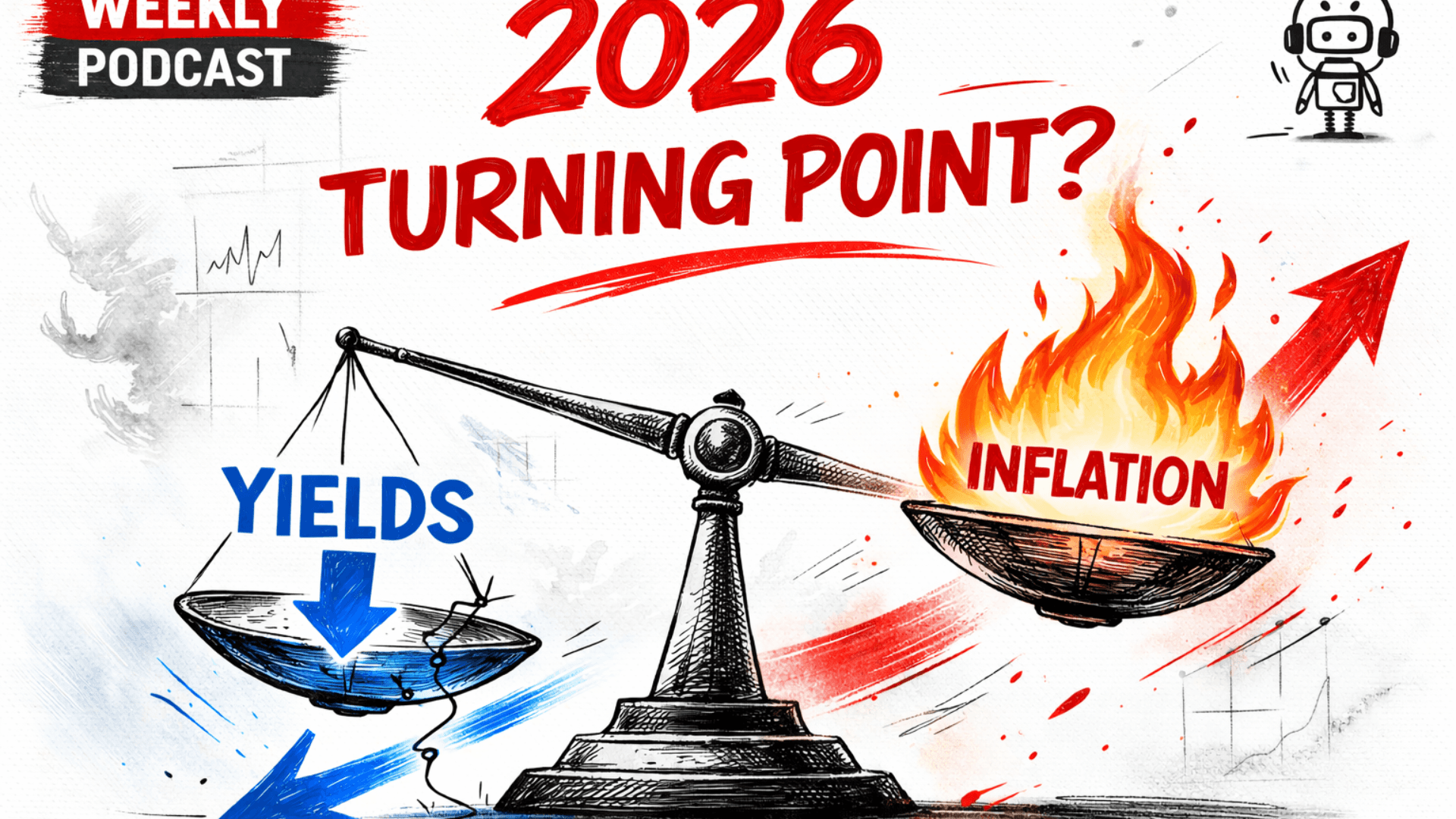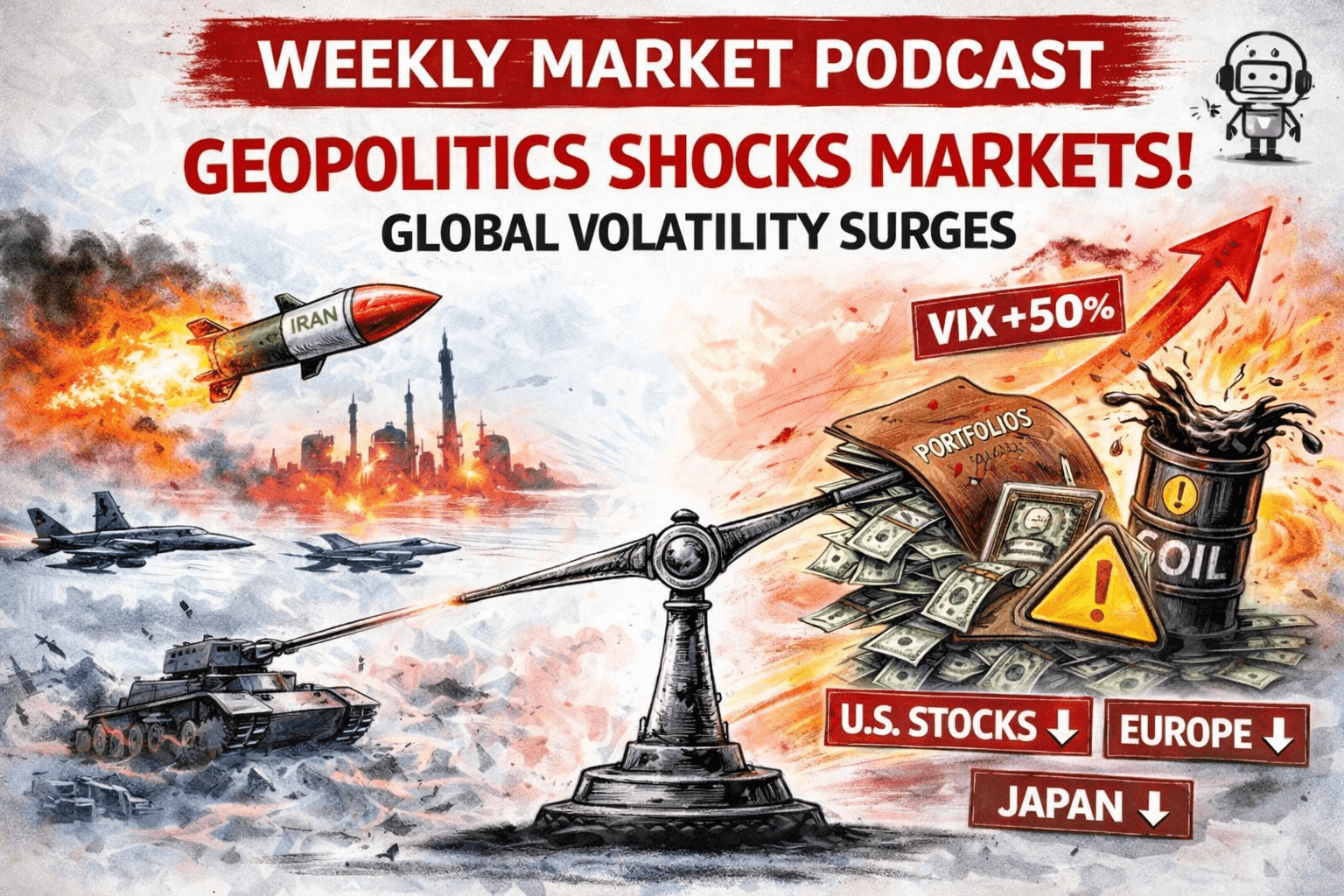
The week ending March 6, 2026, delivered a genuine macro shock. What began as a geopolitical escalation quickly turned into a full-scale repricing of energy, inflation, growth, currencies, and monetary policy. The immediate catalyst was the market fallout from the recent US and Israeli strikes on Iran, but the deeper message was broader: global markets are now operating without a cushion.
Oil surged from roughly $67 to $91 per barrel in a matter of days, the largest weekly jump since 2022. The VIX, Wall Street’s core fear gauge, spiked nearly 50% to 29.5 as investors rushed to buy protection. Bond yields jumped. Equities sold off. And the comforting disinflation narrative that had supported markets for months suddenly looked fragile.
The central theme is interconnection. A conflict near a critical shipping chokepoint instantly fed into oil, inflation expectations, global growth fears, and central bank paralysis. What happened this week was not a local event with local consequences. It was a reminder that markets now transmit shocks globally at extraordinary speed.
Below is a structured breakdown of what mattered, what did not, and what could reshape markets in the week ahead.
United States: Trade Relief Meets Stagflation Risk
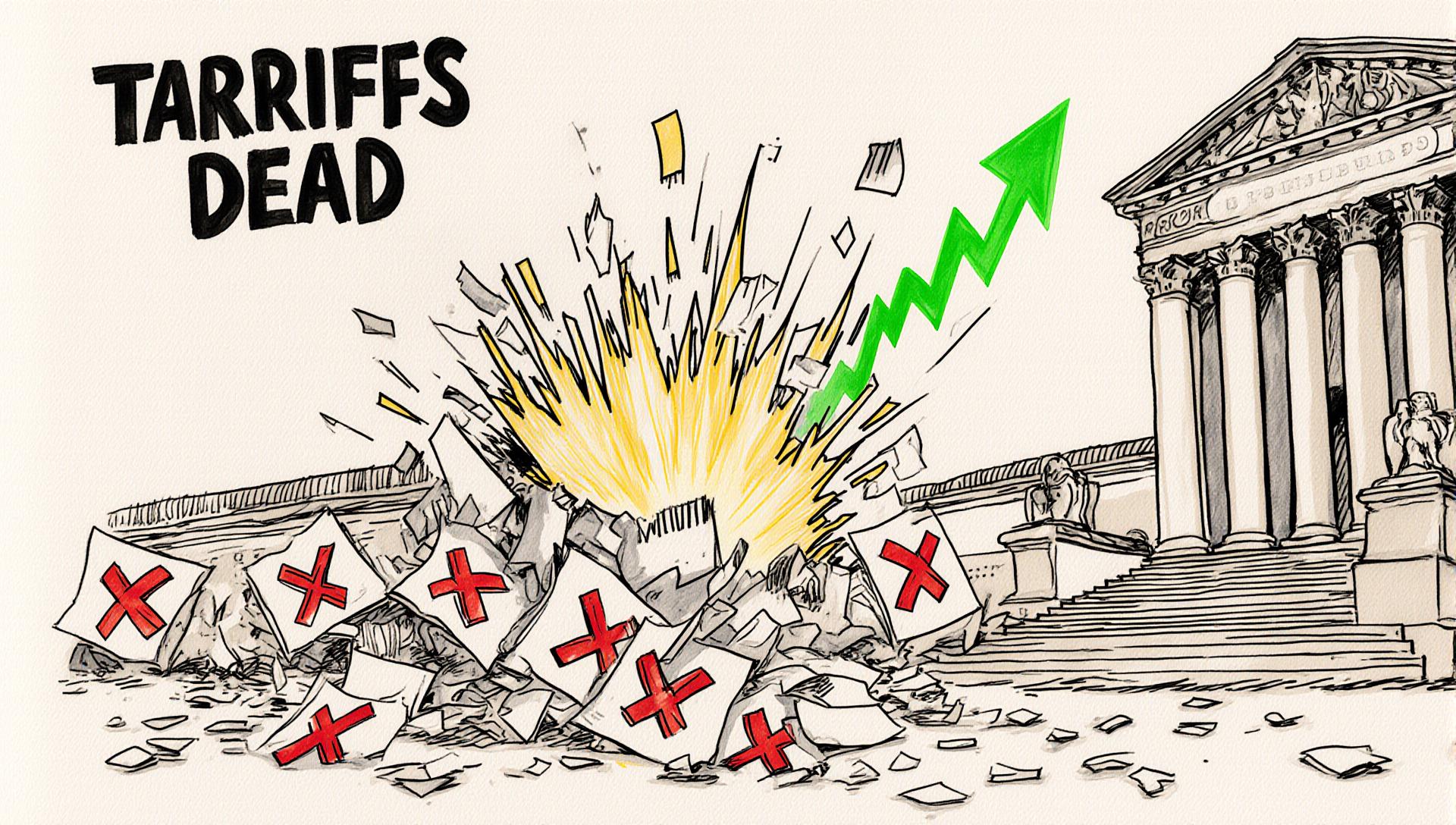
US equities initially rallied after the Supreme Court ruled 6–3 to overturn the previous administration’s global tariffs. That decision removed a major source of friction from trade and supply chains, and investors immediately priced down the risk of a renewed tariff regime. The S&P 500 gained 1.1%, and the NASDAQ rose 1.5%.
There is also a second-order effect still developing. If those tariffs are ultimately treated as unlawful from inception, companies may have claims on billions of dollars in refunds. Markets quickly embraced the balance-sheet upside, even though the legal and administrative process could take time.
But the macro backdrop sharply undercut that optimism.
Fourth-quarter GDP slowed to 1.4% annualized, down dramatically from 4.4% in the prior quarter. Some of that deceleration reflects earlier shutdown distortions, but the slowdown is too large to dismiss as pure noise. Private-sector momentum is fading.
At the same time, inflation moved in the wrong direction. Core PCE, the Federal Reserve’s preferred measure, rose 0.4% month over month and reached 3.0% year over year. Headline PCE climbed to 2.9%, the highest since March 2024. That matters because it suggests inflation is no longer gliding smoothly toward target.
The labor market added another layer of contradiction. February payrolls fell by 92,000, a deeply disappointing result, and the unemployment rate ticked up to 4.4%. Under normal conditions, that would argue for easier policy. Yet ISM surveys told the opposite story. Services surged to 56.1, and manufacturing rose to 52.4, both clearly in expansion territory.
This creates a difficult interpretation. Businesses are still producing and maintaining output, but they are freezing hiring and cutting staff in anticipation of tougher conditions ahead. Efficiency is improving, but confidence is weakening.
That leaves the Fed trapped. If it cuts rates to cushion a deteriorating labor market, it risks validating an energy-driven inflation rebound. If it stays tight to defend price stability, it risks pushing a slowing economy closer to recession. The policy path is now materially less clear than it was just two weeks ago.
Europe and the United Kingdom: Energy Exposure Turns Into a Market Shock
Europe suffered one of its harshest weeks in months. Germany’s DAX fell 6.7%, France’s CAC 40 lost 6.84%, Italy’s FTSE MIB dropped 6.48%, and the broader STOXX Europe 600 declined 5.55%.
The reason is structural. Europe remains far more exposed to imported energy than the United States. When oil jumps by $24 in a week, European industrial margins come under immediate pressure. That is why the market reaction there was more violent.
The macro data made things worse. Eurozone CPI surprised to the upside at 1.9%, while unemployment fell to a record low 6.1%. On paper, low unemployment sounds positive. In practice, it strengthens wage bargaining power and raises the risk that imported energy inflation will feed into broader domestic inflation pressures.
This is why stagflation has re-entered the conversation. Europe now faces the uncomfortable combination of weak growth, rising input costs, and a tight labor market. Markets have started to price a real possibility that the ECB may need to stay hawkish, or even tighten unexpectedly, into an economy that is already losing momentum.
The UK was hit hard as well. The FTSE 100 fell 5.74%, and the pound dropped to its weakest level since December. Construction PMI slowed sharply, signaling that high borrowing costs are still biting. Halifax house prices, however, unexpectedly rose 1.3% year over year, a reminder that housing can lag broader market stress.
The more important signal came from the Office for Budget Responsibility, which warned that the Middle East conflict could have very significant effects on the UK economy. That language is unusually blunt by institutional standards and suggests policymakers are increasingly worried about an energy-led downturn.
Japan: Imported Inflation and Currency Stress
Japan also endured a difficult week. The Nikkei fell 5.49% and the TOPIX dropped 5.63%, but the most important move was in the currency. The yen weakened to 157.6 per US dollar, intensifying the inflation problem at precisely the wrong moment.
Japan imports a large share of its energy from the Gulf, and because oil is priced in dollars, the effect is doubled when the yen weakens. Japanese firms are paying more because crude prices jumped, and then paying even more again because their own currency buys fewer dollars.
That is the multiplier effect now threatening Japanese manufacturers and consumers alike.
The domestic side is also heating up. Labor unions are demanding wage increases of 6%, an unusually aggressive figure in Japan’s historical context. So imported inflation is colliding with stronger internal wage pressure, exactly as the Bank of Japan is trying to normalize policy.
This makes the BoJ’s position precarious. Officials are already warning about possible foreign exchange intervention to stabilize the yen, but tighter policy during a global growth scare could destabilize Japan’s own fragile recovery. The room for error is very small.
China: Relative Resilience, Strategic Retrenchment
China’s markets declined much less than most of the world. The CSI 300 was down only 1.07%, the Shanghai Composite fell 0.93%, and the Hang Seng lost 3.28%.
That relative resilience reflects a deeper strategic transition. Beijing is no longer chasing growth through indiscriminate construction and debt-heavy property expansion. Instead, it is guiding the economy toward targeted sectors and accepting a lower but more controlled growth profile.
Its new 2026 GDP target of 4.5% to 5% is the clearest signal yet that the era of double-digit expansion is over. To support that shift, authorities announced 800 billion yuan in new investment financing and allowed local governments to issue 4.4 trillion yuan in special bonds.
The key is where the money is going: technology self-sufficiency, advanced manufacturing, and strategic industrial capacity.
The PMI data captures the transition. The official PMI, dominated by large state-owned firms, remained in contraction at 49.0. But the Caixin PMI, which better reflects smaller, private, export-oriented firms, rose to 52.1. That divergence shows that legacy heavy industry is struggling while parts of the private industrial economy are still expanding.
For investors, this means the old “buy China” approach no longer works. The country must now be approached sector by sector, with attention to what Beijing is actively protecting and what it is allowing to weaken.
The Week Ahead: March 9–13
The coming week could determine whether markets continue trading geopolitical fear or revert to a more traditional focus on inflation and central banks.
In the US, Tuesday brings existing home sales and the NFIB small business optimism index. Wednesday is pivotal with CPI and the federal budget statement. Thursday adds trade balance, housing starts, and jobless claims. Friday is especially dense, with PCE, the second estimate of Q4 GDP, JOLTS job openings, durable goods, and the University of Michigan consumer sentiment index.
CPI and PCE matter for slightly different reasons. CPI captures direct out-of-pocket price changes. PCE adjusts for substitution effects, making it more comprehensive and more useful for the Fed. If both point to renewed inflation pressure, especially from energy, markets will likely price out any remaining hopes of near-term rate cuts.
Internationally, China reports inflation on Monday and trade data Tuesday. Those releases will be important for understanding how much external demand is offsetting slower domestic momentum. The UK releases January GDP on Friday, which could confirm whether stagnation is turning into something worse.
In Europe and Japan, scheduled data is less important than headline risk. Markets will be watching the geopolitical tape, oil prices, and any BoJ commentary on possible FX intervention extremely closely.
Top Five Risks to Watch
Oil supply shock escalation
A direct disruption in the Strait of Hormuz would push oil even higher and likely overwhelm all other market narratives.
US inflation surprise
If CPI and PCE both come in hot, markets may fully abandon hopes of Fed easing this year.
US labor market deterioration
Another weak labor signal would intensify recession fears and complicate already-fragile risk sentiment.
Japan currency intervention
A sudden move to defend the yen could trigger sharp cross-asset volatility through global FX and carry positions.
China growth disappointment
If targeted stimulus fails to support activity, emerging markets and global commodities could come under heavy pressure.
Final Insight: The End of the Old Hedge
This week’s events revealed something deeper than just another geopolitical scare. They exposed how fragile the traditional portfolio framework has become.
A single external shock moved oil, inflation expectations, Treasury yields, equities, the yen, and central bank outlooks all at once. In that kind of environment, the classic 60/40 portfolio no longer looks like an automatic shield. Stocks and bonds can now be hit by the same inflation shock, at the same time, for the same reason.
That is the real question for the decade ahead: not whether volatility is back, but whether the old hedging models still work in a hyperconnected world where politics, commodities, and monetary policy are increasingly inseparable.
FAQs
Why did oil matter more than any single data release this week?
Because a rapid oil spike directly affects inflation, consumer spending, profit margins, and central bank expectations all at once.
Why was Europe hit harder than the US?
Europe is much more dependent on imported energy and has less domestic supply cushion when global oil prices surge.
Why is Japan especially vulnerable?
Because it faces both higher dollar-priced energy costs and a weaker yen, which amplifies imported inflation.
Why did China fall less than other markets?
Because Beijing is already guiding the economy toward a lower-growth, more targeted strategic model, which reduced the surprise factor.
What matters most next week?
US CPI and PCE, plus oil price developments and any signs that labor market weakness is becoming more entrenched.
Hashtags
#WeeklyMarketUpdate #GlobalMarkets #OilShock #Inflation #FederalReserve #EuropeMarkets #JapanYen #ChinaEconomy #Geopolitics #MarketVolatility #InvestmentStrategy
Subscribe to our Newsletter
Discover more